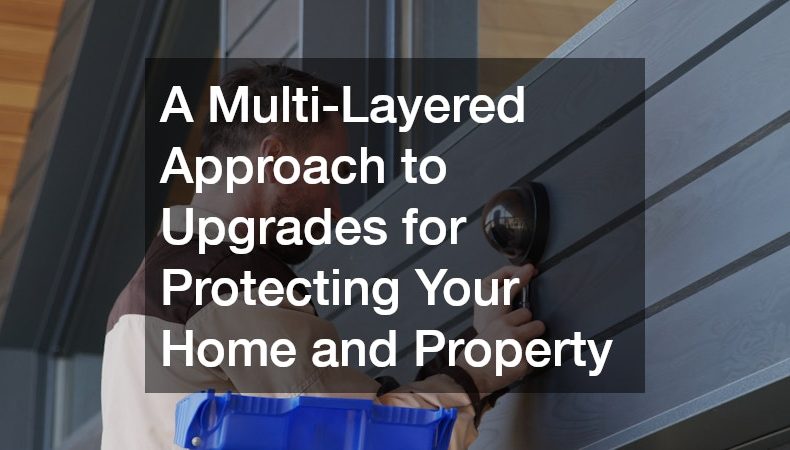
A Multi-Layered Approach to Upgrades for Protecting Your Home and Property
Securing your home involves more than just installing a single robust lock or placing an elegant surveillance camera above the front entryway. We live in an era where the methods employed by criminals have become increasingly complex and advanced, rendering old-school methods of home protection less effective. Relying solely on one form of defense leaves your abode susceptible to breaches and invasions. To achieve genuine peace of mind, it’s crucial to embrace a comprehensive security strategy. This approach entails layering multiple, overlapping defenses that start from the very boundary of your property and extend inward to the heart of your home. By doing so, you transform your residence into a formidable and least appealing target for any potential intruder, who will find the risk of attempting a breach far outweighs the potential rewards.
When a criminal evaluates a neighborhood for potential targets, they are searching for opportunities that offer the least resistance—places where they can quickly and quietly execute their plans without getting caught. They scrutinize the area for properties featuring blind spots, weak physical barriers, and rapid escape routes, which make their unlawful actions simpler. However, your primary objective shouldn’t necessarily be constructing a fortress that’s impervious to all threats. Instead, your approach should involve creating conditions that introduce significant challenges for would-be intruders. You want to make any unauthorized entry so cumbersome, conspicuous, and time-consuming that it becomes unattractive and fraught with risk from their standpoint. To realize this goal, focus on securing the perimeter of your property and reinforcing the exterior shell of your home. Pay special attention to fortifying critical entry points — such as doors and windows — and capitalize on cutting-edge technology that can provide surveillance, detection, and deterrence. By methodically enhancing these aspects, you effectively eliminate possible structural weaknesses and assuredly preserve the safety of both your family and your valuable possessions.
Securing Your Property Line
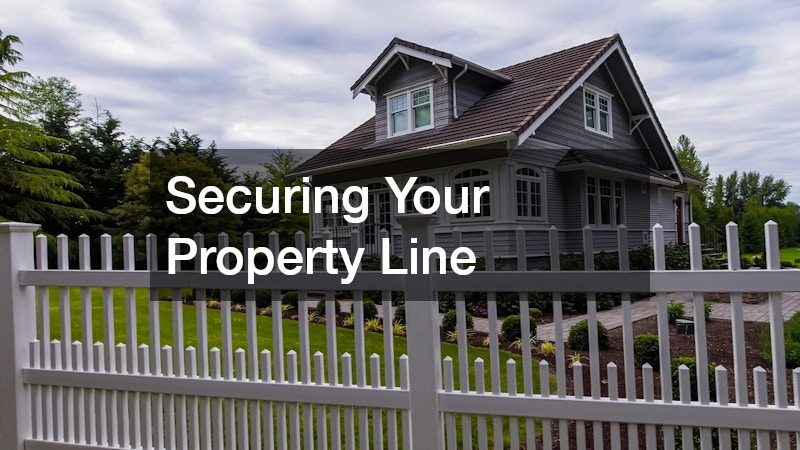
The absolute first line of defense for any home is its outer perimeter. Establishing a clear, physical boundary sends a psychological signal to intruders that your property is monitored and defended. When designing your perimeter, the objective is to balance robust physical containment with high visibility. High, solid walls might keep people out, but if an intruder manages to scale them, those same walls will shield them from the view of neighbors and passing patrol cars.
To optimize your boundary lines, consider scheduling consultations with professional fence companies to discuss materials that offer both strength and visibility, such as ornamental iron or heavy-duty chain link with anti-climb mesh. Additionally, you must manage the natural vegetation around these barriers. Employing a professional landscaping service ensures that your greenery works for your security rather than against it.
- Implement the 3/7 Rule: Keep all bushes, hedges, and shrubs trimmed down to a maximum height of 3 feet to prevent anyone from crouching behind them. Simultaneously, prune the lower branches of mature trees up to a height of at least 7 feet. This creates a clear window of visibility across your yard.
- Incorporate Defensive Landscaping: Plant thorny vegetation, such as bougainvillea, holly, or barberry bushes, directly beneath perimeter fences and windows to serve as a painful natural deterrent.
- Install Perimeter Lighting: Mount motion-activated LED floodlights along your boundary lines, ensuring light points outward to blind intruders while illuminating them clearly to anyone looking from the house.
Fortifying Vehicle Access Points
An open, inviting driveway is a direct pathway to your front door. If your driveway allows vehicles to pull directly up to your garage or main entrance unnoticed, you lose a critical buffer zone. Fortifying this area means managing both the structural layout and the surface transitions of your property’s vehicle approaches to maximize control and deter uninvited guests.
Upgrading your driveway requires a smooth, reliable foundation that integrates seamlessly with automated security gates. Working with experienced paving contractors allows you to design a driveway entry that can support the weight of heavy, automated gates and embedded vehicle sensors. Furthermore, integrating dedicated hardscaping services ensures that retaining walls, stone pillars, and decorative pathways guide foot traffic exactly where you want it, preventing intruders from slipping through side gaps in your driveway layout.
- Install Automated Security Gates: Opt for a heavy cantilever or swing gate equipped with a rolling-code remote system or a smart intercom that alerts your phone whenever a vehicle approaches.
- Incorporate Speed Bumps or Chicanes: If you have a long, winding driveway, use structural hardscaping elements to force vehicles to slow down, reducing the likelihood of quick, aggressive drive-by intrusions.
- Embed Ground Sensors: Place magnetic vehicle detection loops beneath the surface of your driveway. These sensors can trigger an internal chime in the house or turn on specific floodlights the moment an unauthorized vehicle crosses your property line.
Eliminating Hidden Vulnerabilities
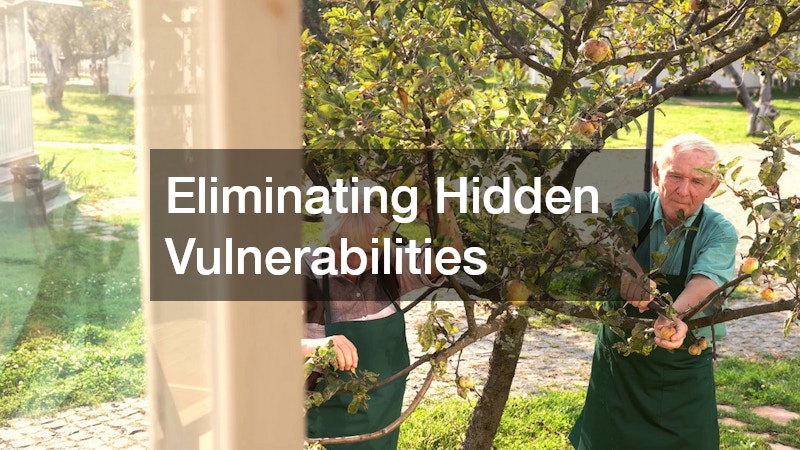
Security upgrades must also look upward. Homeowners often forget that the upper levels of a house can be incredibly vulnerable if mature trees or architectural features provide easy climbing platforms. If a thief can scramble up a thick tree branch and step directly onto a second-story balcony or roof line, your ground-floor locks become entirely irrelevant.
To mitigate these vertical risks, you should look into professional tree services to systematically audit the large trees on your property. Any thick branches growing within ten feet of your roofline, gutters, or upper-story windows should be completely removed. At the same time, maintaining the integrity of your roof prevents weaknesses that could be exploited. Investing in reliable roofing services ensures that your soffits, fascia boards, and roof hatches are structurally sound, tightly sealed, and reinforced against forced entry or manipulation.
- Clear the Ten-Foot Buffer Zone: Ensure there is a strict ten-foot gap between any tree limb and the structure of your home to prevent athletic intruders from leaping onto your roof or balconies.
- Wrap Tree Trunks: For trees that are close to the house and cannot be heavily pruned, wrap the bottom six feet of the trunk in smooth plastic or metal baffling to prevent anyone from gaining a climbing foothold.
- Secure Roof Vents and Skylights: Ensure that all attic vents, turbine fans, and skylights are bolted down from the inside and backed with heavy-gauge steel mesh to block secondary entry points.
Reinforcing Against Forced Entry
The physical walls of your home act as the barrier between the unpredictable outside world and your private living spaces. Over time, weather, moisture, and pests can degrade the exterior cladding of a home, creating soft spots. If your exterior materials are rotting, warping, or pulling away from the studs, an intruder can easily pry them open to access interior framing or utility lines.
A thorough fortification strategy involves hiring a certified siding company to evaluate the structural integrity of your home’s exterior walls. Upgrading to high-impact materials, such as fiber-cement siding or engineered wood, adds a dense layer of protection that resists impacts, cutting tools, and prying maneuvers.
- Protect Utility Entrances: Ensure that exterior breaker boxes, fiber-optic internet lines, and telephone wires are locked inside heavy metal enclosures. If an intruder can easily snip your power or internet lines, they can disable many standard security features.
- Reinforce Crawlspace and Basement Access: Ground-level access hatches should be constructed of heavy-gauge steel or solid wood and secured with heavy-duty padlocks that feature shrouded shackles to resist bolt cutters.
- Install Crawlspace Well Covers: If your basement has window wells, install heavy, locked polycarbonate or steel grate covers over them to prevent intruders from dropping down into hidden spaces.
Windows and Ground-Floor Glass
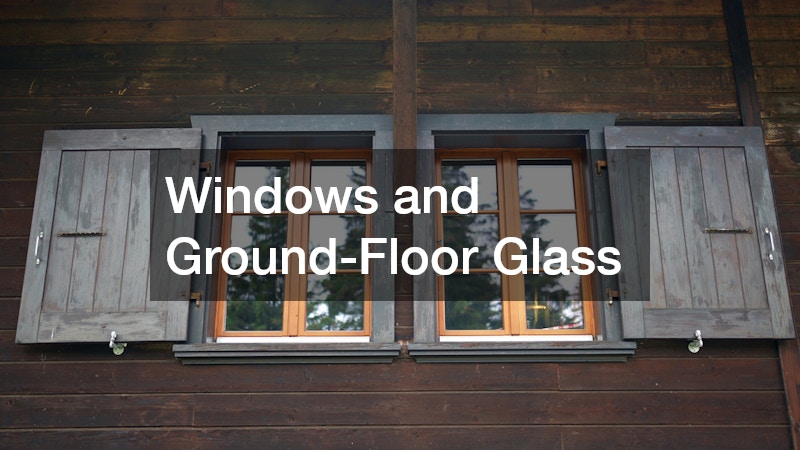
Windows are historically the most fragile points of any home’s architecture. Standard residential glass can be shattered in seconds with a simple handheld tool, allowing a thief to reach inside and turn the window latch. Upgrading your window security is one of the highest-return investments you can make to protect your household.
When your existing windows are old, single-pane, or feature flimsy plastic latches, it is time to invest in comprehensive window replacements. Modern security-focused windows feature multi-point locking systems, heavy-duty vinyl or aluminum frames, and impact-resistant laminated glass. Laminated glass consists of a tough polyvinyl butyral interlayer sandwiched between two sheets of glass; even if the glass is hit with a sledgehammer, it shatters but remains firmly held together by the inner layer, denying entry.
- Apply Security Window Film: If full replacements are not immediately within your budget, apply a minimum of 8-mil thick shatterproof security film to all ground-floor windows. Anchor the film to the window frame using a structural silicone adhesive for maximum resistance.
- Upgrade Window Locks: Replace basic crescent latches with heavy-duty sash jammers or keyed locks that prevent the window from being forced open vertically or horizontally even if the glass is broken.
- Install Window Bar Constraints: Use adjustable security bars in the tracks of sliding windows to physically prevent them from opening more than a few inches, allowing for ventilation without compromising security.
Securing Garages and Outbuildings
The garage is a favorite target for burglars because it is frequently left unlocked, contains high-value tools and vehicles, and often provides a hidden, sheltered doorway directly into the main house. A thief who gains access to your garage can close the main door behind them and take their time breaching your interior door without any neighbors noticing.
Securing this zone requires professional garage door services to inspect your track alignment, reinforce overhead panel mounts, and upgrade your automated opening systems. Modern garage openers utilize rolling-code technology, which constantly changes the digital key required to open the door, completely neutralizing the risk of digital code-grabbing attacks used by modern thieves.
- The Emergency Release Trick: Tie up or remove the plastic toggle on your garage door’s manual emergency release rope. Thieves often use a coat hanger to fish through the top gap of the garage door, hook the release cord, and manually pull the door open in seconds.
- Harden the Interconnecting Door: Treat the door leading from your garage into your living space like an exterior front door. It should be a solid-core wood or insulated steel door equipped with a heavy-duty grade 1 deadbolt and a reinforced strike plate.
- Use Automatic Closing Features: Equip your garage door opener with a timer-to-close feature that automatically shuts the door if it has been left open for more than ten or fifteen minutes.
Smart Surveillance and Centralized Monitoring

Once your physical barriers are firmly established, you must overlay an electronic shield to monitor activity, record evidence, and summon emergency services automatically. An electronic security system acts as the brains of your defense setup, tying together your physical upgrades and giving you real-time oversight of your entire property.
Investing in a comprehensive home security system provides you with a centralized control panel linked to door and window sensors, interior motion detectors, glass-break sensors, and high-definition surveillance cameras. This tech ecosystem should be monitored 24/7 by a professional monitoring center that can instantly dispatch local law enforcement the moment an alarm is triggered.
- Optimize Camera Placement: Mount outdoor cameras at a height of 8 to 10 feet to prevent tampering, focusing them specifically on high-vulnerability choke points such as the back door, side walkways, and driveway approaches.
- Deploy Glass-Break Sensors: Place acoustic glass-break detectors in rooms with large amounts of glass, such as sunrooms or living areas with sliding patio doors. These sensors listen specifically for the shockwave frequency of breaking glass and trip the alarm instantly.
- Establish Power Redundancy: Plug your main security hub, router, and modem into an Uninterruptible Power Supply battery backup system. This ensures your cameras and sensors continue streaming data and sending alerts even if an intruder cuts your main electrical lines.
Upgrading your home security is an ongoing process of assessment, reinforcement, and maintenance. By moving away from a reactionary mindset and adopting a proactive, layered defense strategy, you systematically strip away the opportunities that criminals look for when scouting a target. From trimming your property’s trees and reinforcing your fences to installing impact-resistant windows, heavy-duty doors, and smart electronic surveillance, every individual upgrade you make adds an extra minute of delay and an extra layer of risk for a potential intruder.
Take the time to walk through your property today with a critical eye. Start from the very edge of your curb and walk toward your front door, viewing your home from the perspective of an outsider. Identify your weakest links, map out your upgrade path, and begin implementing these structural defenses. Your home is your sanctuary, and taking these concrete steps will ensure it remains a safe, secure environment for your family for many years to come.