
How Roofers Recommend Preparing Your Home for Severe Weather
Severe weather can place significant stress on a home, often exposing weaknesses that are not visible during calm conditions. High winds, heavy rainfall, hail, and rapid temperature shifts can all contribute to structural strain, especially on the roof and exterior envelope. Preparation is not just about reacting to weather forecasts but about building resilience into the home before storms arrive.
Professional roofers often emphasize that many weather-related damages are preventable with proactive planning. Small vulnerabilities, when left unaddressed, can escalate into costly repairs after a storm passes.
Homeowners who understand how their property responds to environmental stress are better positioned to reduce risk and maintain long-term structural integrity.
Strengthening the Roof and Exterior Envelope
One of the first areas to assess before severe weather is the roof system itself. Loose shingles, weakened flashing, and clogged drainage pathways can quickly turn into entry points for water. In many cases, roofers recommend a seasonal inspection to identify early signs of wear that might not be obvious from ground level. Even minor imperfections can become significant failures when exposed to sustained wind or heavy rain.
Beyond the roofing surface, the surrounding exterior components also play a critical role in protection. Gutters, soffits, and fascia boards should be checked for stability and proper alignment. When these systems function correctly, they direct water away from the structure and reduce pressure on vulnerable roof edges. Neglecting these areas often leads to water pooling or overflow during storms.
Homeowners should also consider how surrounding trees and landscaping interact with the roof. Overhanging branches can scrape roofing materials or break during storms, causing impact damage. Clearing potential hazards in advance reduces the likelihood of debris-related issues when weather conditions intensify.
Securing Interior Systems and Structural Weak Points
Preparing for severe weather is not limited to the exterior; the interior structure also requires attention. Attics, in particular, should be inspected for signs of moisture intrusion or inadequate ventilation. Poor airflow can exacerbate humidity buildup, which weakens insulation and framing over time. Ensuring proper sealing around vents and penetrations helps maintain a stable internal environment.
Windows and doors are additional pressure points during storms. Gaps in seals or aging weatherstripping can allow wind-driven rain to enter the home. Reinforcing these areas improves energy efficiency while also reducing the likelihood of interior water damage. Even small improvements, such as replacing worn seals, can make a measurable difference during high-pressure weather systems.
Electrical and mechanical systems should also be reviewed for exposure risks. Items stored in basements or lower levels may need to be elevated in flood-prone areas. Securing important utilities and ensuring backup systems are functional provides added resilience when weather conditions disrupt normal infrastructure.
Emergency Readiness and Long-Term Protection Planning
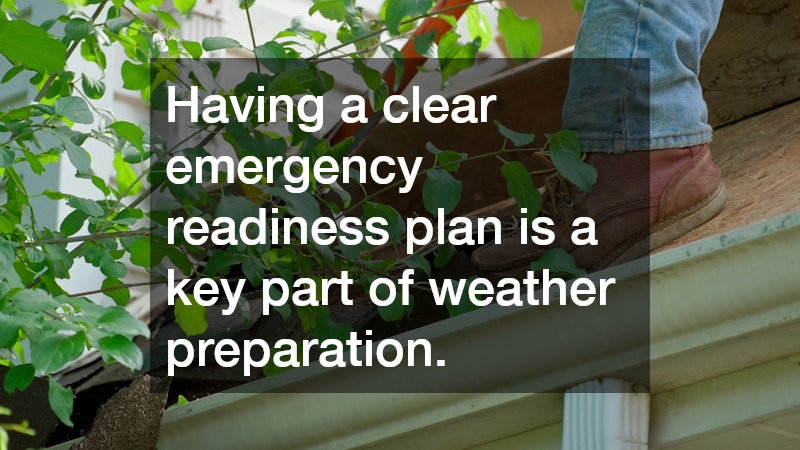
Having a clear emergency readiness plan is a key part of weather preparation. This includes understanding how to safely shut off utilities, identifying secure interior spaces, and maintaining accessible emergency supplies. While storms cannot always be predicted with precision, preparedness reduces uncertainty and helps homeowners respond more effectively when conditions change rapidly.
Long-term protection also involves periodic evaluation of the entire roofing system. Experienced roofers often advise scheduling inspections after major seasonal shifts, particularly in regions that experience both heavy snow and summer storms. These evaluations help identify evolving vulnerabilities before they develop into structural concerns.
Insurance coverage and documentation are also important components of a comprehensive strategy. Keeping records of home improvements and maintenance activities can streamline claims processing if damage does occur. A well-documented property history supports faster recovery and reduces administrative delays following severe weather events.
Preparing a home for severe weather requires a combination of structural awareness, preventative maintenance, and forward-thinking planning. Each part of the property, from the roof to the interior systems, contributes to overall resilience. When these elements are properly maintained, the home is far better equipped to withstand changing weather conditions.
By addressing vulnerabilities early and maintaining consistent upkeep, homeowners reduce the likelihood of unexpected damage and costly repairs. With guidance often shared by experienced roofers, a proactive approach becomes the most reliable way to protect both the structure and the people inside it when severe weather strikes. Taking action before storms arrive remains the most effective way to preserve both safety and property value over time.