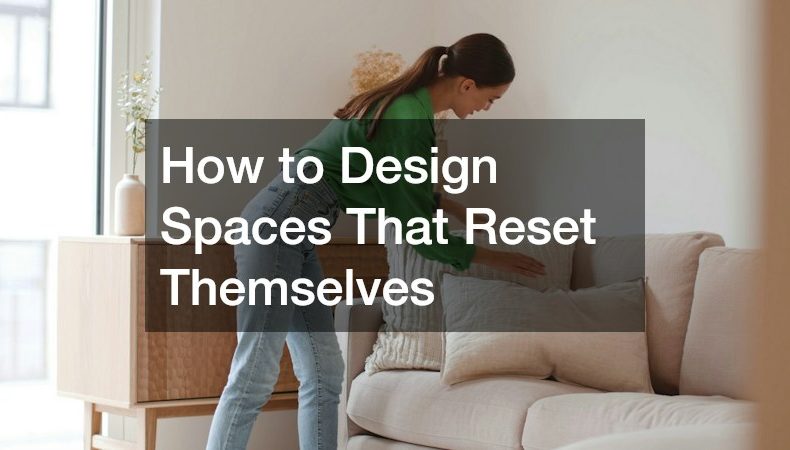
How to Design Spaces That Reset Themselves
Every evening, millions of homeowners engage in an exhausting, uphill battle against domestic entropy. Counters are cleared, throw pillows are fluffed, children’s toys are gathered from living room corners, and dishes are scrubbed, only for the entire scene to descend into disarray within forty-eight hours. This perpetual cycle of tidying creates chronic low-grade frustration. It leads many to believe they lack the personal discipline, organizational drive, or time to keep a home functional and clean.
The problem, however, is rarely a matter of willpower. The root issue is spatial architecture and environmental friction. Most residential spaces are designed around static visual aesthetics rather than the dynamic realities of human behavior. When an environment requires multiple physical decisions, high-effort storage steps, and constant manual intervention just to maintain order, the system is fundamentally broken. When daily life gets hectic, manual tidying habits collapse under the sheer weight of structural friction.
Eliminate Spatial Overload: The Foundation of Zero Friction

A space cannot reset itself if its physical contents exceed its volumetric capacity. In physics, when pressure inside a closed vessel exceeds its maximum threshold, the vessel ruptures. In home organization, when physical possessions exceed designated storage margins, clutter spills outward onto horizontal surfaces: dining tables, kitchen islands, entry consoles, and bedroom chairs. These horizontal catch-alls are where household systems go to die.
Establishing Hard Volumetric Boundaries
To design an environment that recovers quickly, you must establish hard, non-negotiable storage boundaries. This begins with an honest spatial audit of your primary living zones:
- The Twenty Percent Buffer Rule: A drawer, shelf, or closet filled to one hundred percent capacity requires complex physical maneuvering to retrieve or return a single item. Every storage container, shelf, and drawer must retain a twenty percent buffer of empty space. This empty margin eliminates physical resistance, allowing hands to deposit items in seconds without rearranging neighboring items.
- The Container as a Physical Limit: View storage containers, baskets, and shelves not merely as organizers, but as hard physical limits. If a toy bin, magazine basket, or linen shelf becomes full, you do not purchase a larger container; you purge down until the remaining items fit comfortably within the original container while maintaining the empty buffer.
- Targeting the Drop Zones: Inspect the spaces where clutter naturally accumulates. In most homes, mail, backpacks, outerwear, and packaging congregate on the kitchen island or entryway bench. These items end up there because the friction of opening closed closet doors, operating tiny coat hooks, or filing paperwork away in an adjoining room exceeds the human tolerance for effort after a tiring day.
Executing Large-Scale Deaccessioning
Surface-level decluttering using standard kitchen trash bags often fails because it introduces secondary visual clutter. Piles of plastic bags sit near the front door or in the garage for weeks, draining motivation and making spaces feel more chaotic while the project drags on.
- Whole-Home Clearance Campaigns: True environmental resets require aggressive, high-volume purging phases where obsolete furniture, worn textiles, expired goods, and accumulated garage inventory are permanently removed from the property in a single weekend. Securing an on-site dumpster rental creates a central, high-capacity repository for high-volume disposal, allowing you to bypass indoor sorting piles and carry broken materials, obsolete goods, and renovation debris straight out of your living space.
- Disposing of Non-Standard Items: Standard residential trash routes cannot absorb large, unwieldy objects such as worn mattresses, broken metal gym frames, aged sofas, and dilapidated patio sets. Coordinating with dedicated junk hauling services ensures that these space-consuming obstacles are loaded and transported away safely without scratching interior drywall, marring door frames, or taking up precious vehicle space during disposal runs.
Once excessive spatial volume is eliminated from the home footprint, the remaining possessions can be integrated into dedicated storage systems that operate in harmony with your daily routines.
Build Storage by Ergonomic Proximity
The fundamental principle of behavioral ergonomics in home design is that items must live within direct arm’s reach of their ultimate point of consumption. Storing cooking spices across the room from the range, placing cleaning supplies behind deep hallway linen piles, or locating laundry hampers far from the primary changing area guarantees that items will be abandoned on counters, dressers, and floors.
Engineering Intentional Drop Zones
When people return home from school or work, they look for the path of least resistance to shed their external gear. If your entryway lacks dedicated, open-access staging, belongings will naturally migrate to living room seating, breakfast tables, and kitchen counters.
- Zero-Step Entry Architecture: Design entryways that require zero opening motions. Replace traditional hangers on high rods with heavy-duty open wall pegs positioned at varying heights for adults and children. Shoes should slide directly into low, slatted shoe shelves rather than behind closed louvered doors.
- Delineated Landing Trays: Every entry console requires an attractive, heavy, rimmed dish or wooden valet tray designed solely for keys, transit cards, wallets, and pocket items. A rimmed tray creates a clear tactile boundary; placing keys near the tray feels incorrect, which naturally prompts family members to drop their everyday carry items inside the boundary without second thought.
Custom Cabinetry and Precision Hardware
Mass-market builder cabinetry often creates massive storage problems. Standard deep base units act like cavernous black holes where cooking tools, small appliances, and pantry goods get lost in back corners, prompting clutter to spill back out onto countertops.
- Optimizing Vertical Real Estate: Upgrading primary storage with customized cabinets that incorporate full-extension ball-bearing drawer glides, vertical sheet pan dividers, pull-out pantry towers, and blind-corner pullouts turns dead interior volume into usable space. When every item is completely visible the moment a drawer opens, locating cooking gear takes seconds, and returning it to its designated spot becomes effortless.
- Professional Hardware Installation: Hanging floating organizers, aligning drawer slides, and securing heavy overhead storage requires precise leveling and anchoring into wall studs. Hiring a qualified handyman ensures that wall-mounted storage tracks, floating shelving systems, heavy coat peg rails, and specialty drawer inserts are anchored securely into structural framing, preventing bowed shelves and loose fasteners from degrading your daily routines.
Eliminating Retrieval Resistance
Any storage solution that requires multiple physical steps to open or close creates friction that works against maintaining order. The human brain naturally favors single-motion efficiency:
- The No-Lid Principle: Lids on everyday storage bins are subtle psychological deterrents. When throwing dirty laundry into a basket requires lifting a hinged lid, clothes often end up beside the hamper. Replace lidded baskets in bathrooms and closets with open, durable canvas or wire bins.
- Visible Labeling Systems: Clearly label storage containers with direct, simple terminology. Labels do not just help you locate stored belongings; their true value lies in removing the cognitive hesitation when returning items. When a bin clearly reads “Batteries” or “First Aid,” anyone in the household can reset the room without asking where things belong.
Modernize Layouts and Core Architecture for Low-Maintenance Living

Surface organization cannot compensate for a poorly planned floor plan, restrictive pathways, or volatile indoor temperatures. The physical structure of your home must serve as an active partner in your daily maintenance routine, facilitating movement and minimizing the physical effort required to keep things clean.
Strategic Structural Renovations
When redesigning living areas, consider structural modifications that integrate maintenance workflows directly into your home’s layout:
- Smart Structural Modifications: Investing in thoughtful home remodeling construction allows you to reconfigure awkward walls, incorporate recessed wall niches for vacuum storage, run central laundry chutes directly into utility rooms, and build hidden electrical charging stations inside storage alcoves. When everyday electronics charge out of sight within closed cabinets, primary living counters remain completely free of tangled cords.
- Recessed Service Infrastructure: Planning structural renovations with accessible chases, removable baseboard raceways, and dedicated utility access panels ensures that future electrical and plumbing updates can be performed without destroying drywall or dismantling built-in furniture.
Thermal Balance and Climate Stability
The ambient indoor environment plays an overlooked role in keeping a home tidy. Uncomfortable, drafty rooms drive bad organizational habits that quickly clutter living spaces:
- The Clutter of Temperature Extremes: Rooms with irregular temperatures, cold drafts, or high humidity often fill up with temporary fixes: heavy piles of fleece blankets, portable electric space heaters, oscillating fans, and temporary humidifiers. These temporary appliances trail power cords across floors, take up valuable space, and make daily vacuuming a chore.
- Upgrading the Thermal Envelope: Upgrading home insulation within exterior walls, attic spaces, and floor assemblies establishes consistent ambient temperatures throughout every room in the house. A home with an air-sealed, properly insulated envelope eliminates drafts and prevents moisture condensation on window glass, allowing you to retire bulky seasonal floor heaters and blanket bins in favor of a clean, minimalist layout.
Safeguard Wet Zones Against Structural Disruptions
A home’s kitchen, bathrooms, and laundry facilities are the primary engines of daily hygiene and order. When water fixtures, supply lines, or drainage systems develop problems, household systems can quickly break down. A single dripping pipe beneath a kitchen sink can rot organizational inserts, force you to evacuate supplies into your main cooking space, and bring normal meal cleanup to a complete standstill.
Proactive Supply and Drainage Maintenance
Hidden water leaks are the primary enemy of built-in storage. Water from small valve seeps swells particleboard cabinets, ruins shelf liners, and creates conditions where mold and mildew can flourish:
- Addressing Early Valve Deterioration: Even tiny, slow drips at supply connections, under-sink valves, or toilet shutoffs will eventually saturate flooring and undermine subfloor strength. Scheduling prompt plumbing repair at the first sign of moisture, weeping valves, or pipe corrosion preserves expensive cabinetry, protects structural subflooring, and prevents major disruptions to your daily kitchen and bath routines.
- Whole-Home Pressure Regulation: Excess municipal water pressure stresses internal pipe joints, washing machine rubber hoses, and water heater tanks, significantly increasing the likelihood of sudden catastrophic bursts. Partnering with a licensed plumbing company to install high-performance pressure-reducing valves (PRVs) and whole-home automatic leak-detection shutoffs protects your domestic plumbing from thermal expansion spikes and high-pressure failure.
Eliminating Drainage Bottlenecks
Nothing disrupts daily bathroom and kitchen maintenance faster than slow-moving water. When a basin fills with murky water during routine handwashing or dish prep, simple cleanup tasks become frustrating:
- Preventative Drainage Care: Sluggish drainage forces soap scum, grease, and debris to settle along the sides of basins, leaving behind dirty rings that require intensive scrubbing. Routine hydro-jetting, professional augering, and clearing out mechanical hair catchers prevents chronic clogged drains, ensuring that water exits immediately and carries soap residues down the line before they can stain sink surfaces.
- Accessible Cleanouts: Ensure that all primary drainage lines feature accessible, clearly labeled mechanical cleanout plugs. When drain infrastructure can be serviced quickly from dedicated utility areas, maintenance technicians can clear line blockages without dismantling under-sink storage or tracking dirty water through living rooms.
Protect Structural Envelope and High-Risk Utility Areas
The true structural foundation of a low-maintenance home lies in its high-risk utility zones: basements, crawlspaces, mechanical closets, and laundry spaces. These utility areas run the vital mechanical systems that keep the rest of your home functional. If a basement floods or a laundry supply hose splits, the resulting damage can disrupt the entire household for weeks.
Swift Remediation of Water Emergencies
Even the best preventative engineering cannot completely prevent every unforeseen structural failure. When an appliance valve fails or severe weather forces water past foundation walls, immediate action is necessary to protect the home’s framing:
- Mitigating Sub-Surface Damage: Water quickly seeps beneath baseboards, saturates wall insulation, and travels along subfloor channels. When water breaches occur, bringing in specialized water damage repair professionals ensures that industrial-grade air movers, commercial dehumidifiers, and sub-surface moisture meters are deployed immediately to dry structural framing, salvage hardwood floors, and prevent hazardous mold from colonizing wall cavities.
- Restoring Protective Barriers: After a water leak is dried and sanitized, structural finishes must be restored to their original resilience. Applying mildew-resistant primers, water-resistant backer boards, and non-porous floor underlayments restores the room’s defensive envelope, ensuring the space is protected against future moisture incidents.
A clean, serene, functional home is not the result of relentless discipline, exhausting weekend cleaning sessions, or complicated chore charts. True domestic order is a design challenge solved through thoughtful spatial architecture, behavioral ergonomics, and reliable structural engineering.
By eliminating excess volume, bringing storage right to the point of use, upgrading your home’s layout, and protecting critical plumbing and utility infrastructure, you remove the hidden friction that makes daily tidying feel like a chore. The items you use daily flow naturally back to their origins, high-traffic surfaces remain clean, and the home recovers quickly from the demands of busy family life.
When your living environment is intentionally designed to support your natural daily habits, keeping things tidy stops feeling like work. Instead, your home becomes a self-sustaining retreat: a calm, restorative environment that resets itself quickly and effortlessly, giving you back your time and energy for what matters most.